
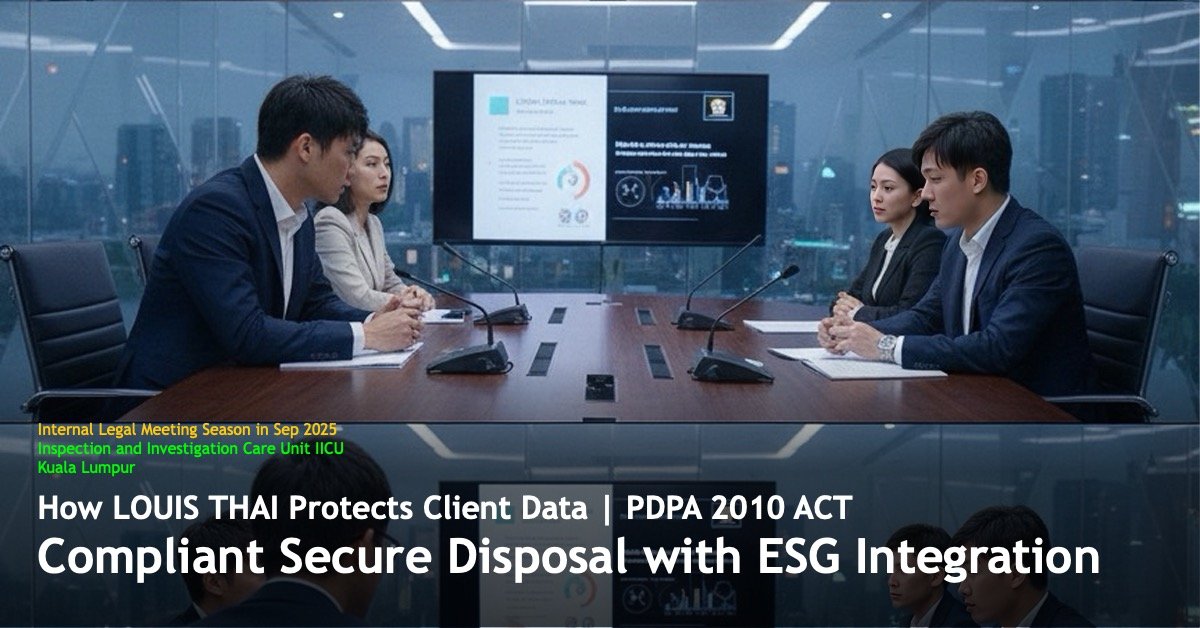
Where Ethical Data Governance Meets Environmental Responsibility
In an era where data breaches, digital surveillance, and privacy erosion dominate global headlines, organisations are increasingly judged not only by the services they offer but by the integrity with which they safeguard personal information. At LOUIS THAI International Group Sdn Bhd, data protection is not an administrative formality—it is a moral, legal, and strategic cornerstone embedded into the company’s governance architecture.
Under Malaysia’s Personal Data Protection Act 2010 (PDPA), organisations are mandated to ensure lawful, secure, and responsible processing of personal data. Yet, LOUIS THAI extends far beyond minimum statutory compliance.
Guided by a commitment to ESG (Environmental, Social and Governance) principles and aligned with the United Nations Sustainable Development Goals (SDGs)—specifically SDG 9 (Industry, Innovation & Infrastructure), SDG 12 (Responsible Consumption & Production), and SDG 16 (Peace, Justice & Strong Institutions)—the Group has established a comprehensive ecosystem for data stewardship.
This system includes both digital safeguards and physical destruction protocols, the latter exemplified through the Group’s use of high-grade cross-cut shredding equipment.
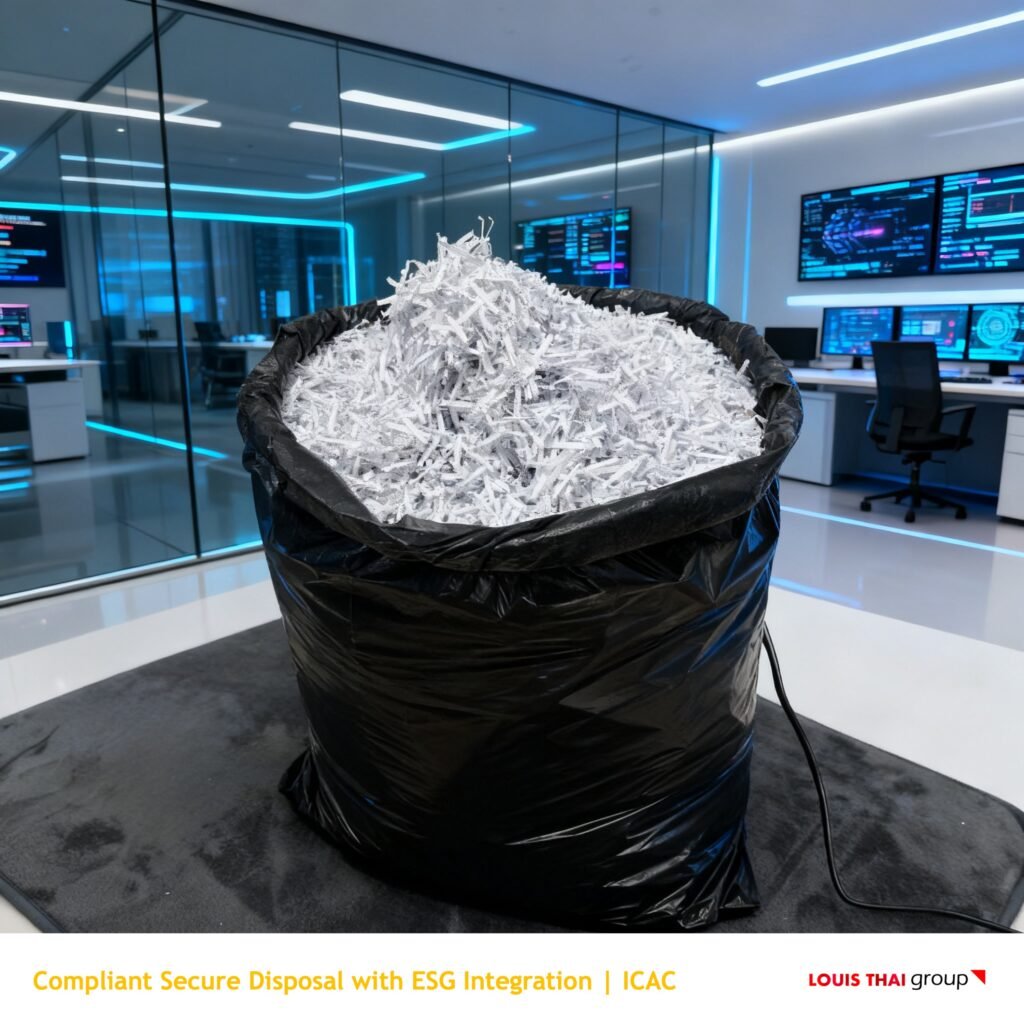
A Dual-Layer Defence: Digital Security Meets Physical Integrity
While cloud-based storage is protected through AES-256 encryption, GDPR-equivalent European servers, and strict access controls (as detailed in the company’s Data Protection and PDPA Compliance Policy) , physical documents remain an overlooked vector of confidentiality risk.
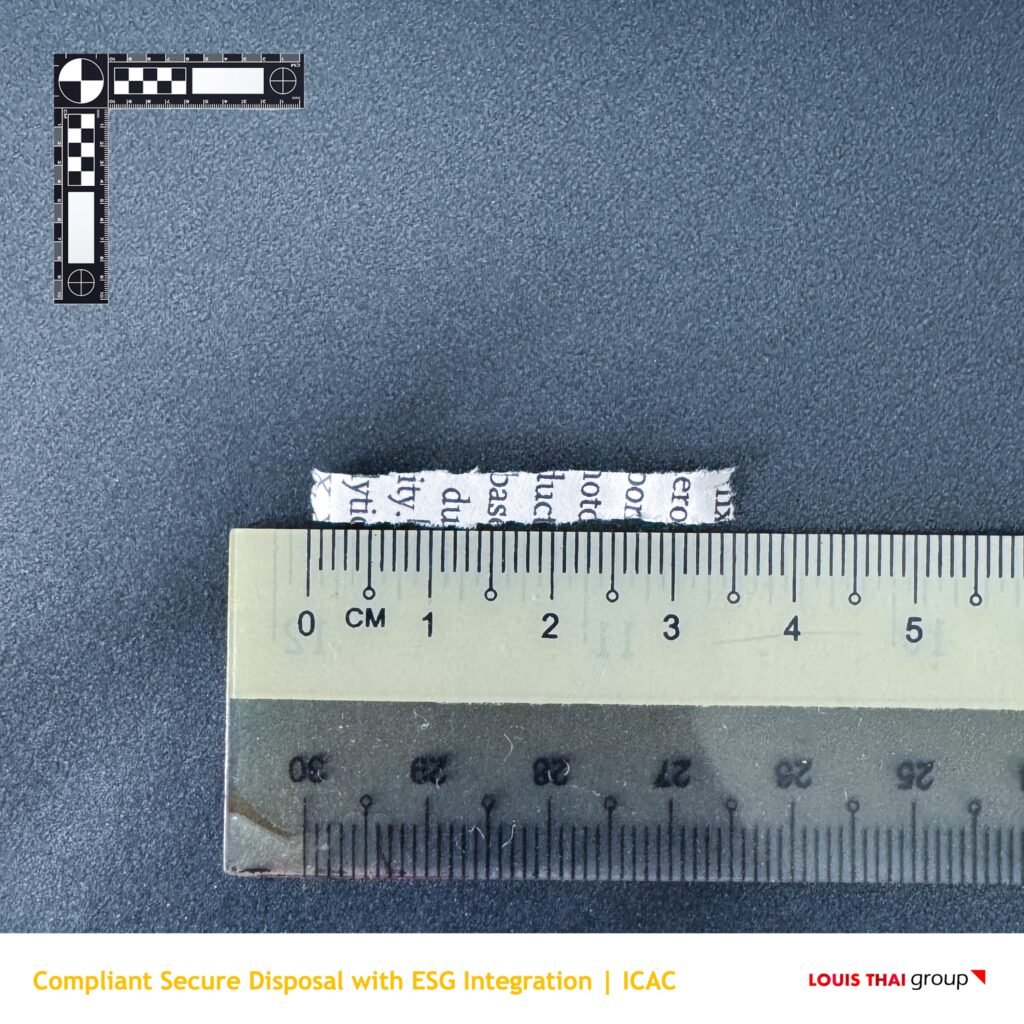
To eliminate this vulnerability, LOUIS THAI implements a documented workflow for secure destruction of sensitive printed materials, including:
- Client consultation notes
- Transaction records
- Ritual and astrology-related documentation containing personal identifiers
- Voice-call transcription drafts
- Internal compliance reports and operational memos
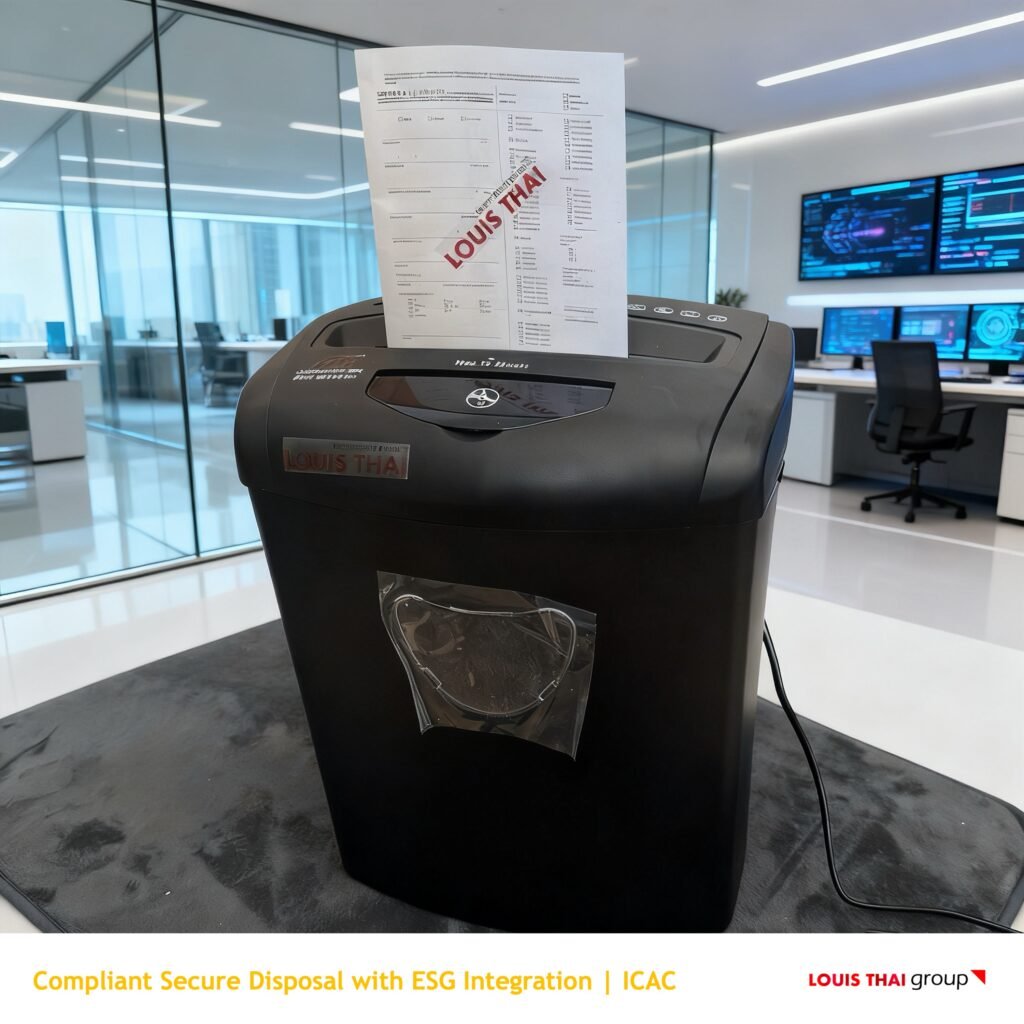
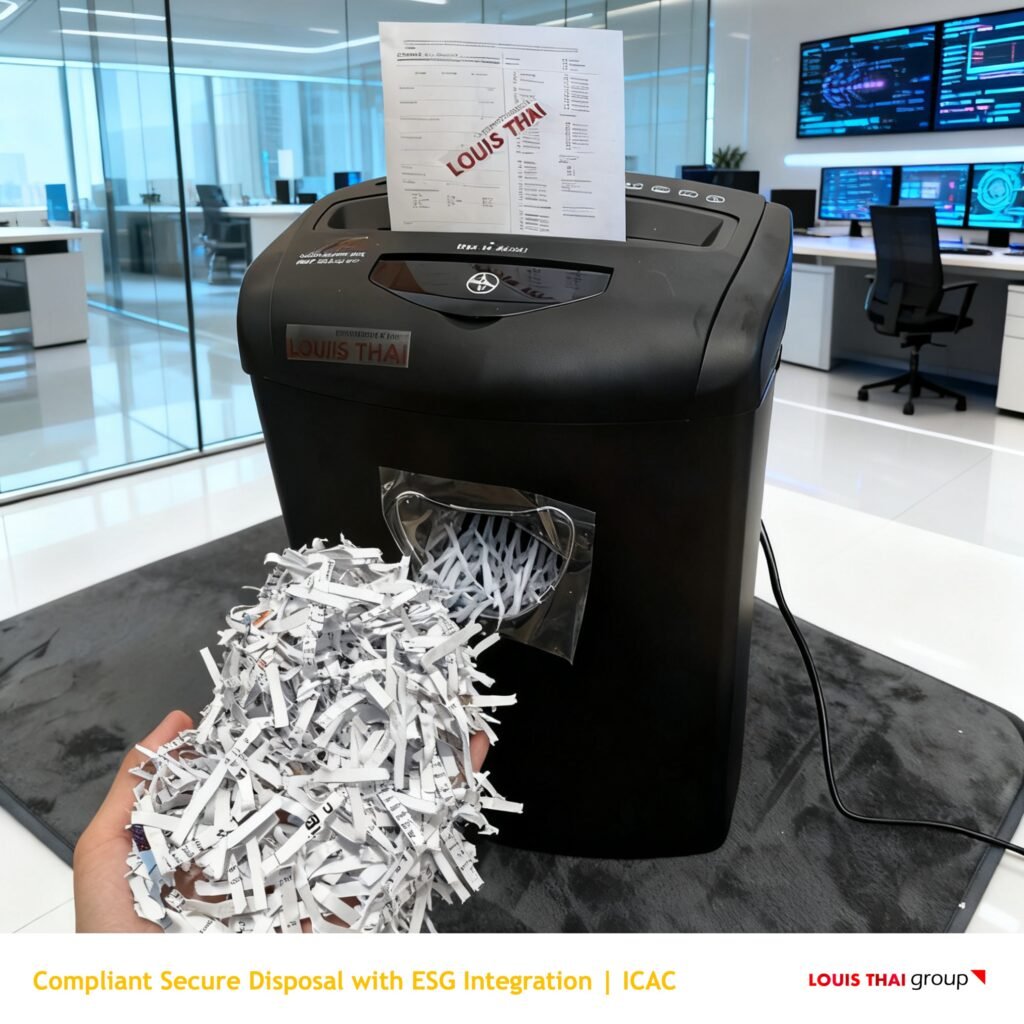
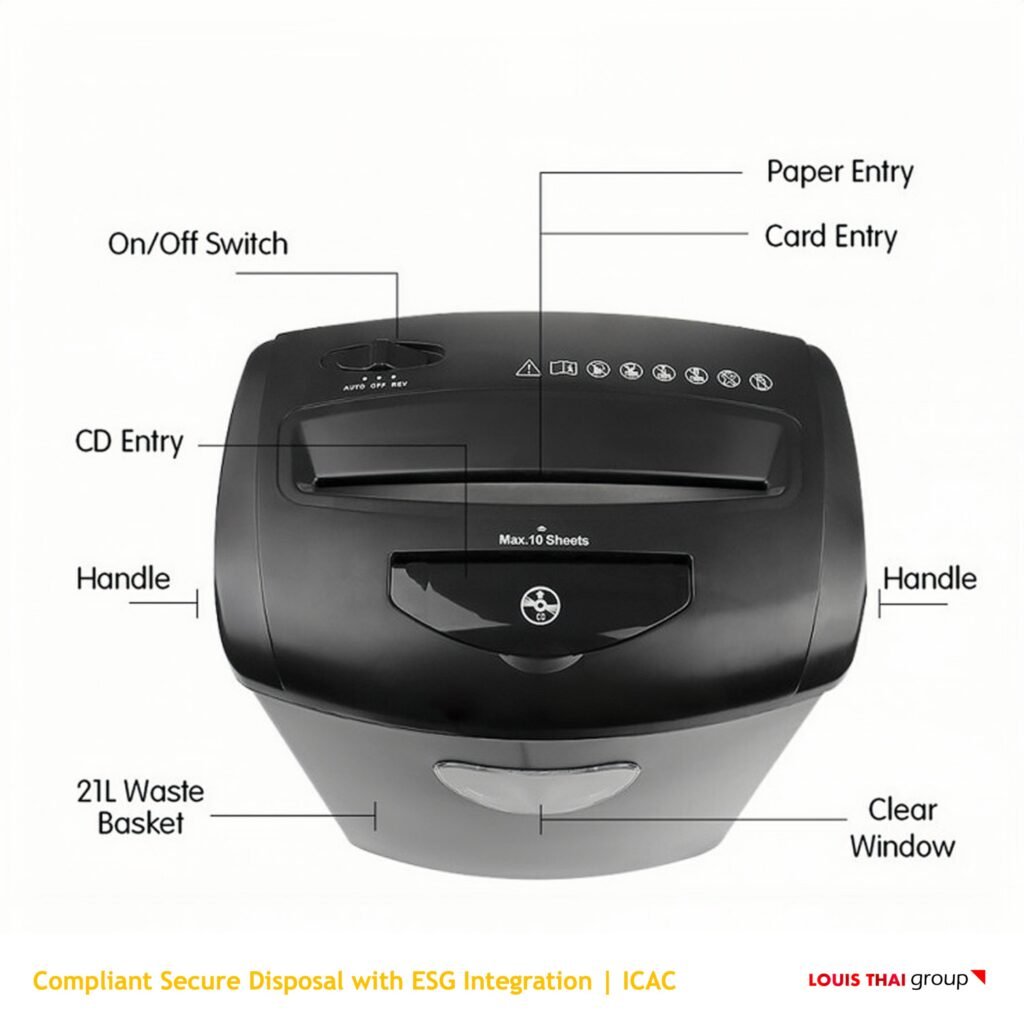
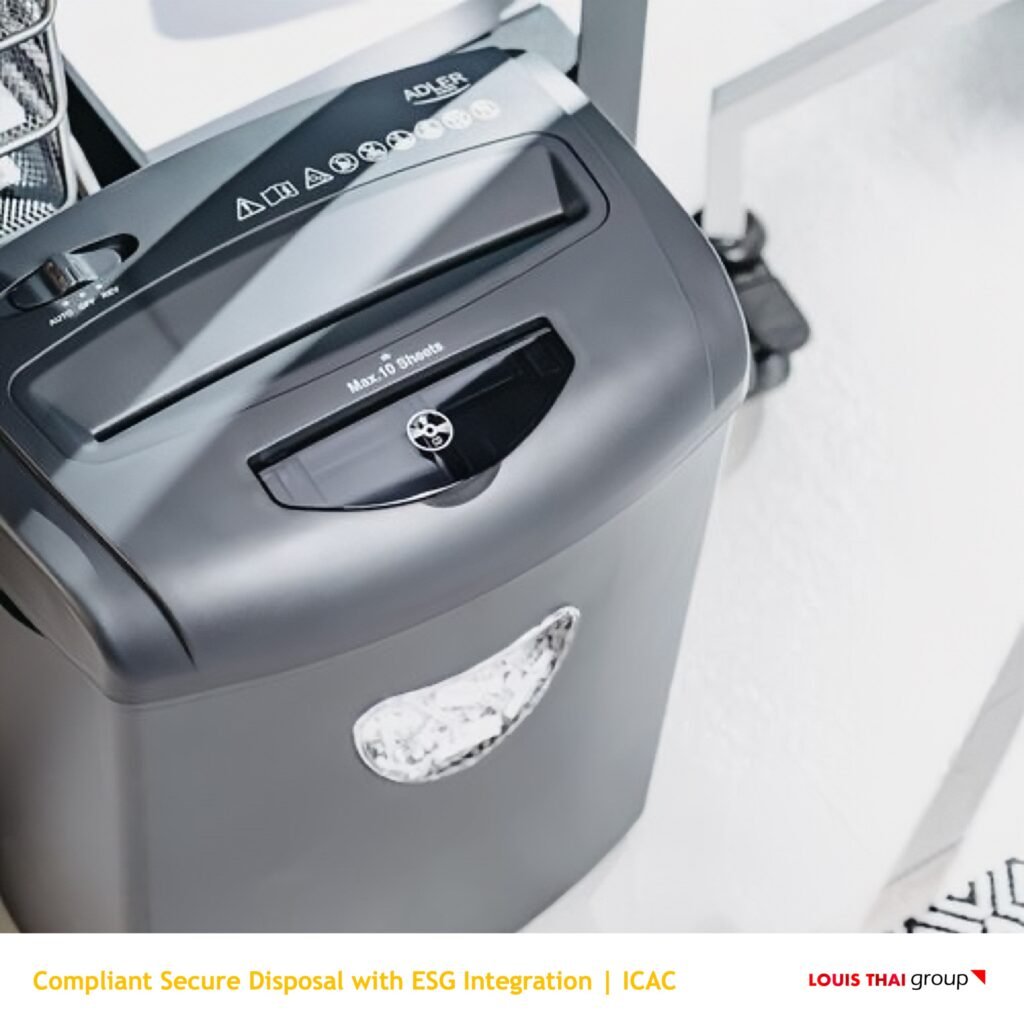
These documents are processed exclusively through a Heavy-Duty Crosscut Paper Shredder (CD / Staples Grade) — a machine selected for its ability to produce micro-fragmented outputs that render reconstruction virtually impossible.
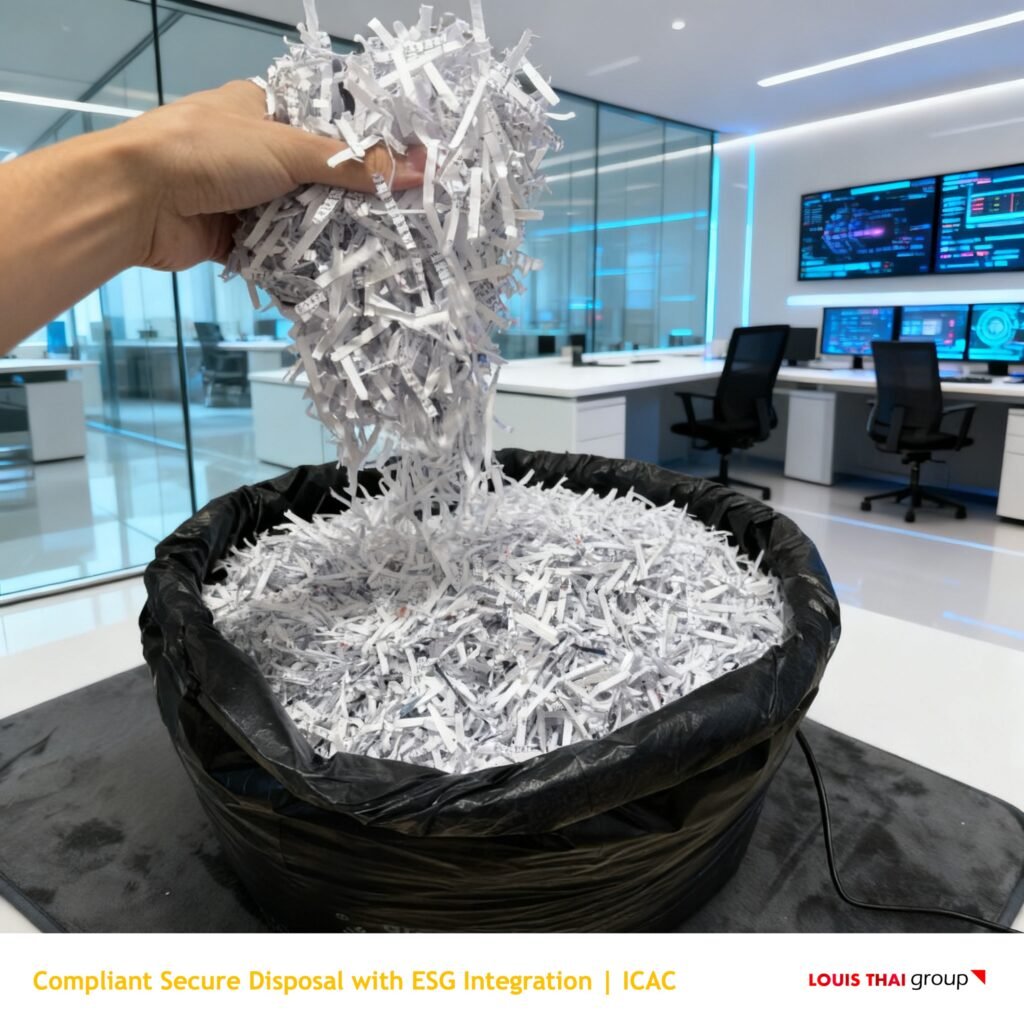
The visual evidence provided below illustrates the Group’s physical compliance measures:
The shredded output aligns with PDPA’s Security Principle, which obligates data users to protect data from loss, misuse, modification, and unauthorised access — including during disposal.
Sustainability in Destruction: Turning Compliance Into ESG Value
While secure disposal is a legal obligation, LOUIS THAI elevates the practice by integrating environmental sustainability into the process. Shredded materials are:
- Collected using Greenmade biodegradable waste liners, supporting responsible waste management
- Channelled into recycling streams where feasible
- Employed as packing filler for non-sensitive merchandise—reducing plastic usage and aligning with SDG 12
This transforms what is traditionally a “cost of compliance” into a model of circular-economy resource optimisation.
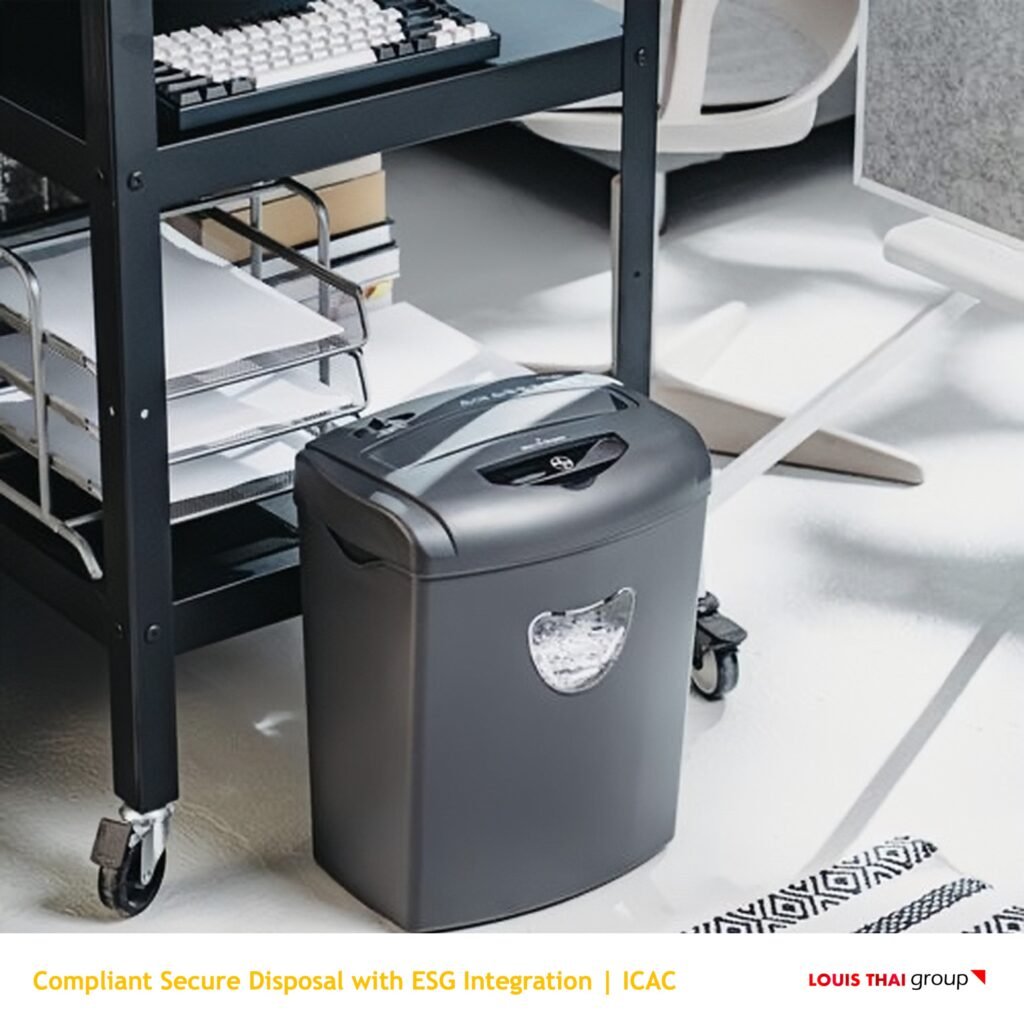
The company’s ESG strategy emphasises minimal environmental impact, even within administrative functions. Secure shredding therefore becomes a symbol of LOUIS THAI’s broader philosophy: every operational act carries ethical and ecological significance.
Governance Excellence Through Transparent Policy Frameworks
LOUIS THAI’s data destruction protocols exist within a larger governance ecosystem anchored by:
- PDPA-compliant consent management
- Cross-border transfer governance (EU GDPR-aligned)
- Structured retention and erasure schedules
- Restricted-access digital repositories
- Internal audit trails
The Group’s official Data Protection & PDPA Compliance Policy provides the foundation for these measures and outlines specific duties, retention durations, breach responses, and data subject rights.
By publishing this policy and attaching it transparently at the end of this article, the organisation reinforces its long-standing commitment to accountability, fairness, and the protection of client trust.
Why ICAC Physical Destruction Still Matters in a Digital Age
Despite the sophistication of modern digital security systems, printed documents continue to play an essential—yet often underestimated—role within organisational workflows. For this reason, LOUIS THAI International Group Sdn Bhd has developed a proprietary framework known as ICAC (Internal Compliance & Assurance Criteria) to govern all physical destruction activities involving sensitive information.
The shredding process showcased in the photographs is not a mere operational routine; it is the practical embodiment of the ICAC™ principles which define the Group’s standard of confidentiality and data governance excellence.
The ICAC Framework (Internal Compliance & Assurance Criteria)
I — Irreversibility
All printed materials containing personal or sensitive information are destroyed into crosscut fragments of a size that makes reconstruction impossible. This ensures permanent elimination of client data, aligned with PDPA’s Security Principle.
C — Consistency
Each destruction cycle is carried out under a documented Standard Operating Procedure (SOP). Regardless of personnel or workload, the outcome remains uniform and predictable—reflecting disciplined governance in everyday operations.
A — Auditability
The ICAC system maintains traceable logs for every destruction session. Timestamped entries, photographic evidence, and batch identification allow internal auditors—and if required, external regulators—to verify strict compliance.
C — Client Assurance
Transparency is fundamental to trust. By demonstrating the physical destruction process visually and operationally, LOUIS THAI provides clients with tangible proof that their personal information is handled with uncompromising care and confidentiality.
ICAC as a PDPA, ESG, and SDG Compliance Accelerator
The ICAC™ model strengthens multiple regulatory and ethical pillars simultaneously:
- PDPA Security Principle — Preventing loss, misuse, or unauthorised access
- PDPA Retention Principle — Ensuring data is not kept longer than necessary
- PDPA Data Integrity Principle — Guaranteeing accuracy and secure disposal
- ESG Governance (G Component) — Establishing structured, auditable internal controls
- SDG 12 & SDG 16 — Responsible consumption, justice, and institutional integrity
By embedding ICAC into physical destruction processes, the Group ensures that confidential information is managed responsibly from creation to final disposal.
Visual Evidence of ICAC Implementation
These photographs serve as compliance evidence, illustrating:
- the granular crosscut level ensuring irreversibility
- the volume-standard consistency across batches
- the physical audit trail for governance
- documented assurance for client confidence
Conclusion | A Model of Modern Corporate Stewardship
Through deliberate investment in secure equipment, adherence to stringent PDPA guidelines, and conscious integration of ESG and SDG values, LOUIS THAI International Group Sdn Bhd demonstrates that data protection is not simply a regulatory requirement—it is a reflection of organisational character.
Where many companies treat compliance as obligation, LOUIS THAI transforms it into differentiation:
a hallmark of trustworthiness, professionalism, and societal contribution.
The physical destruction of documents, as showcased in the imagery provided, stands as both a literal and symbolic act—the irreversible safeguarding of client confidentiality.
Appendix: Data Protection and PDPA Compliance Policy (Reference Framework)
(Full policy extracted and reviewed; citation provided for audit traceability)
Read more 🔗 Data Protection and PDPA Compliance Policy
Read more 🔗 6A. ICAC Secure Physical Destruction Framework





 and then